
Introduction to Ermine Buttercream
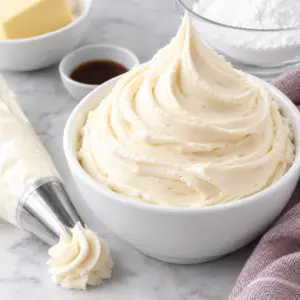
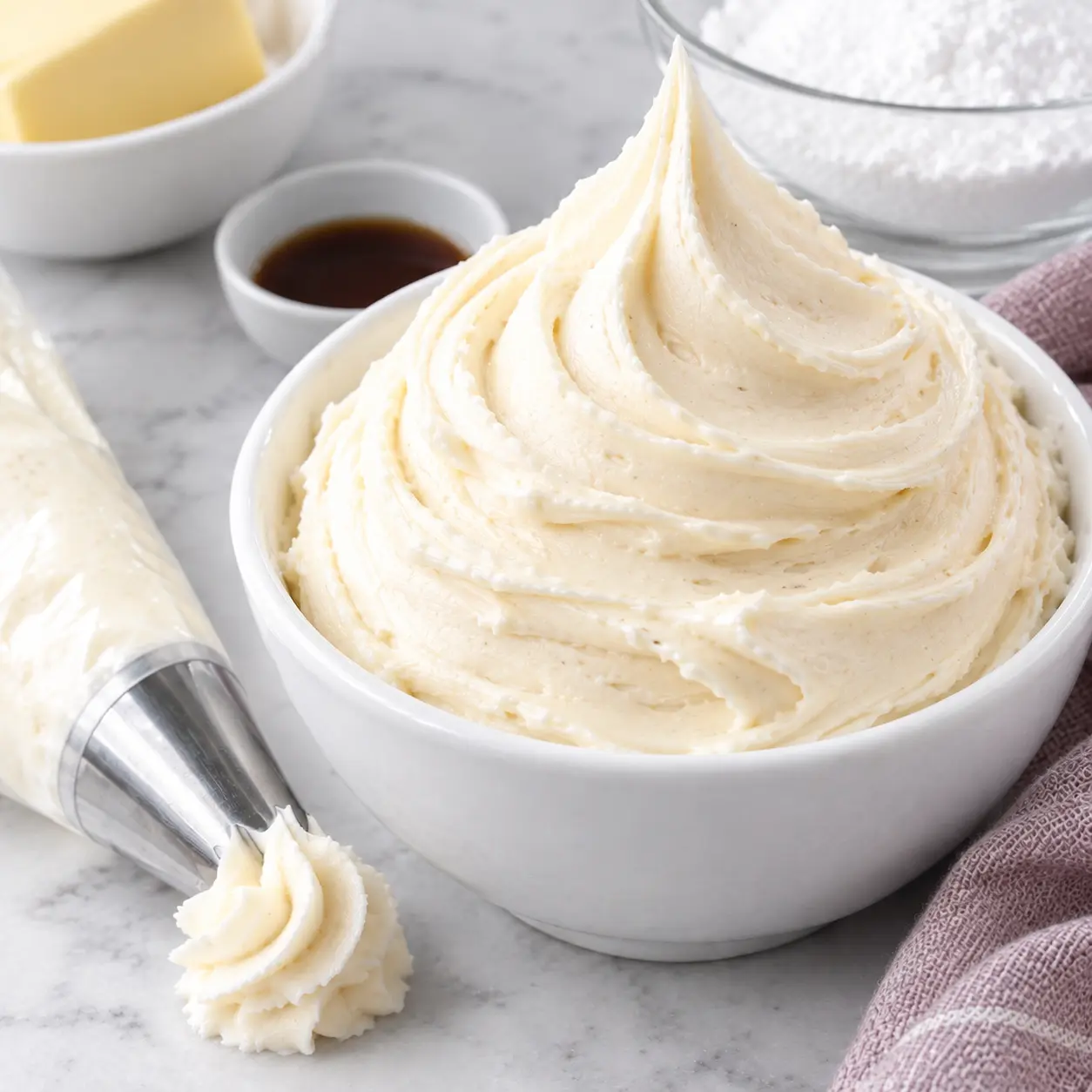
Ermine buttercream is a smooth, gently sweet frosting made with a cooked flour-and-milk base. Unlike many buttercreams, it does not rely on powdered sugar, so the finished texture is soft, light, and silky rather than dense or gritty.
The key is patience. Cook the flour and milk until the mixture becomes thick, then cool it completely before beating it with butter and sugar. This recipe makes enough frosting for an 8-inch two-layer cake, about 24 cupcakes, or a generous batch of cookies.
Why You'll Love This Ermine Buttercream
- The frosting has a smooth texture without powdered sugar or a grainy finish.
- Its sweetness is balanced, making it a good match for rich chocolate cake and other sweet desserts.
- The cooked flour-and-milk base can be prepared ahead of time to make decorating easier.
- A stand mixer or hand mixer turns the cooled mixture into a fluffy, spreadable buttercream.
- The simple vanilla flavor works with cakes, cupcakes, cookies, and snack cakes.
Ingredients for Ermine Buttercream
- 1 cup all-purpose flour
- 1 cup whole milk
- 1 cup unsalted butter, softened
- 1 cup granulated sugar
- 2 tsp vanilla extract
- Pinch of salt
Use softened butter that is cool to the touch, not oily or partially melted. Butter at the right temperature blends into the cooled milk mixture smoothly and helps the frosting hold its shape.
How to Make Ermine Buttercream
Step 1: Cook the Flour and Milk
Whisk 1 cup all-purpose flour and 1 cup whole milk together in a medium saucepan before turning on the heat. Continue whisking until the mixture is smooth, then cook it over medium heat for about 5 to 7 minutes. Stir constantly, scraping the bottom and corners of the pan, until it becomes as thick as pudding. The mixture should briefly hold a line when you drag the whisk through it. Do not let it boil hard, since scorching is more likely once the flour thickens.
Step 2: Cool the Flour Mixture
Scrape the cooked mixture into a shallow bowl or pie plate and press plastic wrap directly against its surface. This prevents a skin from forming. Let it cool at room temperature for about 20 to 30 minutes, then refrigerate it until completely cold, usually 30 to 45 minutes more. The mixture must be no warmer than room temperature before the butter is added. For food safety, refrigerate it within 2 hours of cooking, or within 1 hour if the room is above 90°F.
Step 3: Cream the Butter and Sugar
Place 1 cup unsalted butter, softened, and 1 cup granulated sugar in a large mixing bowl. Beat with a stand mixer fitted with the paddle or whisk attachment, or with a hand mixer, on medium-high speed for 4 to 6 minutes. Scrape the bowl once or twice. The mixture will look pale and fluffy, though the sugar may still feel slightly noticeable at this stage. Add 2 tsp vanilla extract and a Pinch of salt, then mix until combined.
Step 4: Add the Cooled Base
With the mixer on medium speed, add the fully cooled flour-and-milk mixture one spoonful at a time. Allow each spoonful to blend in before adding the next. Scrape the bowl as needed. Adding the base gradually helps the buttercream emulsify instead of becoming lumpy or loose. Once all of the base is incorporated, raise the speed to medium-high and beat for 5 to 8 minutes, until the frosting is pale, fluffy, and smooth.
Step 5: Check the Texture
Stop the mixer and inspect the buttercream. It should be thick enough to sit on a spatula but soft enough to spread easily. If it looks slightly curdled, continue beating for another 2 to 3 minutes; the mixture often comes together with more mixing. If it is loose because the ingredients were warm, chill the bowl for 15 to 20 minutes and beat again. If it is very firm, let it stand for a few minutes at room temperature before mixing.
Step 6: Frost and Store
Use the buttercream right away on completely cooled cake, cupcakes, or cookies. For a layer cake, place one cake layer on a plate, spread frosting over the top, add the second layer, and cover the top and sides. Keep frosted desserts covered at room temperature for up to 2 hours, or refrigerate them for up to 3 days. Let refrigerated buttercream sit at room temperature for 30 to 60 minutes, then beat it briefly before using.
Tips for Success
- Cook the flour and milk until clearly thick. If the base is undercooked, the finished frosting may be loose or have a floury taste.
- Cool the cooked base completely before mixing it with the butter. A warm base can soften the butter and make the frosting soupy.
- Scrape the bowl often so the butter, sugar, and cooked base combine evenly.
- If the frosting looks curdled, keep beating before making changes. Temperature differences can make the mixture look broken temporarily.
- For the cleanest slices, frost the cake while the buttercream is soft, then chill the finished cake briefly before serving.
Equipment Needed
- Medium saucepan
- Whisk
- Large mixing bowl or stand mixer
- Rubber spatula
- Measuring cups and spoons
Variations
- Replace the vanilla with an equal amount of almond extract for a subtly nutty version. Because almond extract is strong, begin with less if you prefer a mild flavor.
- Add 1 teaspoon finely grated orange zest with the vanilla for a fresh citrus note. Make sure the zest is finely grated so it spreads evenly through the frosting.
- For chocolate ermine buttercream, sift 3 tablespoons unsweetened cocoa powder into the flour before whisking in the milk. Cook the mixture as directed, checking that it becomes thick before cooling.
- Use the finished buttercream between two soft cookies or spread it over a simple snack cake. Its moderate sweetness pairs especially well with chocolate and spice cakes.
- For a coffee variation, dissolve 1 tablespoon instant espresso powder in the warm cooked milk mixture after removing it from the heat, then cool the base completely.
Serving Suggestions
Spread ermine buttercream over a cooled layer cake, pipe it onto cupcakes, or use it as a filling for sandwich cookies. The recipe is easiest to spread when it is at cool room temperature. For a cake that has been refrigerated, let it stand until the frosting softens slightly before slicing. Store leftovers covered in the refrigerator and bring them back toward room temperature before serving so the texture becomes smooth again.
FAQs about Ermine Buttercream
What is ermine buttercream? Ermine buttercream is a frosting made by cooking flour and milk into a thick paste, cooling it, and beating it with butter, granulated sugar, vanilla, and salt. It is also called boiled milk frosting or flour buttercream.
Why does my ermine buttercream look curdled? Curdling usually means the cooked base and butter were different temperatures. Keep beating for a few minutes first. If it remains curdled, gently warm the outside of the bowl for a few seconds, then continue mixing. Avoid melting the butter.
Can I make ermine buttercream ahead of time? Yes. Prepare it up to 3 days ahead and refrigerate it in a covered container. Let it sit at room temperature for 30 to 60 minutes, then beat it briefly until smooth before frosting.
Does ermine buttercream need to be refrigerated? It can remain at room temperature for up to 2 hours when used on a dessert. For longer storage, refrigerate it because it contains milk and butter. Keep it covered and use it within 3 days.
Can I pipe ermine buttercream? Yes. Once fully whipped, it pipes well through common decorating tips. If it feels too soft, chill it for 15 to 20 minutes. If it feels too firm, let it warm slightly and mix again before piping.
Final Thoughts
Ermine buttercream takes a few extra minutes because the flour and milk need to be cooked and cooled, but that step gives the frosting its signature smooth texture. Keep the temperatures in check, add the cooled base gradually, and you will have a soft, creamy frosting that is easy to spread and not overly sweet.
Looking for more? This recipe is part of our roundup of 6 Delicious Frostings & Buttercreams For Every Cake Worth Sharing.
Ermine Buttercream
Ingredients
Equipment
Method
- Whisk 1 cup all-purpose flour and 1 cup whole milk in a saucepan, then cook over medium heat for 5 to 7 minutes, stirring constantly, until thick like pudding.
- Cool the cooked mixture completely, then beat 1 cup unsalted butter, softened, and 1 cup granulated sugar until fluffy.
- Beat in 2 tsp vanilla extract and a Pinch of salt, then add the cooled flour mixture one spoonful at a time.
- Beat on medium-high speed for 5 to 8 minutes until smooth and fluffy, then spread or pipe onto completely cooled desserts.
Nutrition
Notes
- Cool the flour-and-milk mixture completely before adding it to the butter.
- Refrigerate leftovers in a covered container for up to 3 days.
- If the frosting looks curdled, continue beating until the ingredients come together.