
Introduction to French Buttercream
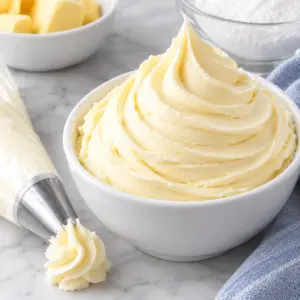
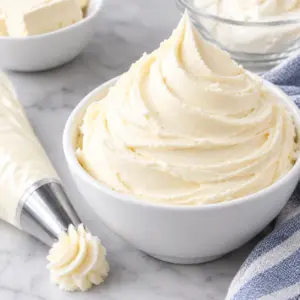
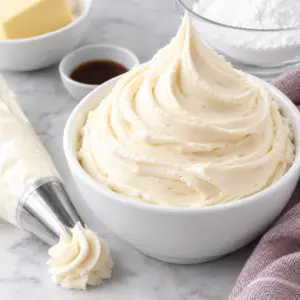
French buttercream is a rich, silky frosting made by whipping egg yolks with hot sugar syrup, then blending in softened butter. The yolks give it a golden color and a soft, custard-like texture, while the butter makes it smooth enough for spreading or piping.
This frosting is less sweet than American buttercream and works especially well with vanilla, chocolate, spice, and fruit cakes. The method takes a little attention, but a stand mixer and a reliable thermometer make the process straightforward. Since this recipe contains egg yolks, heat the sugar syrup carefully and use clean equipment throughout.
Why You'll Love This French Buttercream
- It has a smooth, creamy texture that spreads easily over cakes and cupcakes.
- The egg yolks give the frosting a naturally rich color and custard-like flavor.
- It is less sugary-tasting than a simple powdered-sugar buttercream.
- Vanilla makes a dependable base for cakes, cupcakes, cookies, and dessert bars.
- The finished buttercream can be piped, refrigerated, and brought back to a workable texture.
Ingredients for French Buttercream
- 4 large egg yolks
- 1/2 cup granulated sugar
- 1 cup unsalted butter, softened
- 2 tsp vanilla extract
- Pinch of salt
Use unsalted butter so you can control the seasoning. Let it soften until it presses easily under a fingertip but still feels cool, usually about 30 to 45 minutes at room temperature. Avoid melted or greasy butter, which can make the frosting loose.
How to Make French Buttercream
Step 1: Prepare the Equipment
Set up a stand mixer with the whisk attachment and have a candy or instant-read thermometer ready. Place the egg yolks in the clean mixer bowl, and set a heatproof bowl of cold water nearby in case the syrup needs to be cooled quickly. Make sure the mixer bowl and whisk are completely free of grease, since even a small amount can make the yolks harder to whip.
Step 2: Start Whipping the Yolks
Add the egg yolks to the mixer bowl and begin whipping them on medium speed. Continue until they become lighter in color and slightly thickened, about 2 to 3 minutes. They do not need to reach a stiff peak, but they should be moving steadily by the time the sugar syrup is ready.
Step 3: Cook the Sugar Syrup
Place the granulated sugar and 2 tablespoons of water in a small saucepan. Cook over medium heat, stirring only until the sugar dissolves. Once the mixture begins to boil, stop stirring and cook until the syrup reaches 238°F, also called the soft-ball stage. This usually takes 4 to 6 minutes, but use the temperature rather than the clock as your guide. Keep the pan handle turned away from the edge and take care around the hot syrup.
Step 4: Add the Syrup to the Yolks
With the mixer running on medium-low speed, slowly pour the hot syrup in a thin stream down the inside of the bowl, avoiding the whisk. Increase the speed to medium-high and whip for 8 to 10 minutes, until the mixture is thick, pale, and no longer warm. The bowl should feel close to room temperature before the butter goes in. The hot syrup cooks the yolks as it is incorporated, but do not skip the thermometer or pour the syrup in all at once.
Step 5: Beat in the Butter
Reduce the mixer speed to medium and add the softened butter one tablespoon at a time. Wait until each piece is mostly incorporated before adding the next. The mixture may look loose, curdled, or separated for a few minutes; keep mixing, and it should become smooth and creamy. Add the vanilla extract and salt, then beat for another 1 to 2 minutes. If the bowl still feels warm and the buttercream is very loose, chill it for 10 to 15 minutes before continuing to whip.
Step 6: Use or Store the Frosting
Use the finished buttercream right away to frost a completely cool cake or cupcakes. For piping, transfer it to a pastry bag fitted with your preferred tip. If the buttercream is refrigerated, cover it and store it for up to 3 days. Let it sit at room temperature until softened, then beat it again for several minutes before using. Discard frosting that has been left at room temperature for more than 2 hours, or more than 1 hour when the room is above 90°F.
Tips for Success
- Use a thermometer to check that the syrup reaches 238°F; visual cues alone are less dependable for this recipe.
- Pour the syrup slowly while the mixer is running so it blends into the yolks instead of forming hard threads around the bowl.
- Wait until the yolk mixture is no longer warm before adding butter. Warm buttercream can turn thin and difficult to pipe.
- If the frosting looks curdled, keep beating at medium speed. It often comes together after several minutes.
- If the buttercream is too soft, chill it briefly. If it is too firm, let it stand at room temperature and beat it again.
- Use a serrated knife to level cake layers before frosting so the soft buttercream has an even surface.
- Taste the frosting after adding the vanilla and salt, but do not add extra liquid flavoring unless the buttercream is already stable.
Equipment Needed
- Stand mixer with whisk attachment
- Small saucepan and heatproof spatula
- Candy or instant-read thermometer
Variations
- For chocolate French buttercream, beat in 4 ounces of melted, cooled semisweet chocolate after the butter is fully incorporated.
- For coffee buttercream, dissolve 1 to 2 teaspoons of instant espresso powder in the vanilla extract before adding it to the mixer.
- For citrus buttercream, replace half of the vanilla extract with finely grated orange or lemon zest, adding the zest with the butter.
- For a warm spice version, add 1/2 teaspoon of ground cinnamon and a pinch of nutmeg after the vanilla and salt.
- For fruit flavor, fold in 2 to 3 tablespoons of thick fruit preserves after the buttercream is smooth, using a low mixer speed.
Serving Suggestions
Spread French buttercream between and over two 8-inch cake layers, or use it to frost about 16 cupcakes with a moderate swirl. It pairs well with vanilla sponge, chocolate cake, carrot cake, spice cake, and simple pound cake. Let a frosted cake sit at room temperature for 20 to 30 minutes before serving so the buttercream softens slightly. Keep the finished dessert covered, and refrigerate it if it will not be served within 2 hours.
FAQs about French Buttercream
What is French buttercream? French buttercream is a frosting made by whipping egg yolks with hot sugar syrup and then beating in butter. It is rich, smooth, and less sweet than many powdered-sugar frostings.
Does French buttercream contain raw eggs? The yolks are combined with sugar syrup cooked to 238°F, which heats the yolk mixture as it is whipped. Use a thermometer, clean equipment, and proper refrigeration practices. If you need to avoid raw or lightly cooked egg products entirely, use pasteurized yolks according to their package directions.
Why did my French buttercream curdle? Curdling usually means the butter or yolk mixture was at a different temperature, or the butter was added too quickly. Keep beating at medium speed. If the bowl feels cold, gently warm the outside for a few seconds; if it feels warm, chill the bowl briefly.
Can French buttercream be made ahead? Yes. Cover and refrigerate it for up to 3 days. Let it soften at room temperature, then beat it until smooth before spreading or piping. Do not leave it unrefrigerated for more than 2 hours.
Can I use a hand mixer instead of a stand mixer? Yes, although the process is more tiring and the bowl must be held steady while the syrup is poured. Use a large, deep heatproof bowl and keep the beaters running as you add the syrup slowly.
Final Thoughts
French buttercream rewards steady timing more than complicated technique. Keep the syrup at the right temperature, let the yolks cool before adding the butter, and give the mixer time to bring the frosting together. Once smooth, it makes a polished, softly rich finish for cakes and cupcakes.
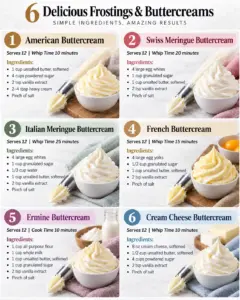
Looking for more? This recipe is part of our roundup of 6 Delicious Frostings & Buttercreams For Every Cake Worth Sharing.
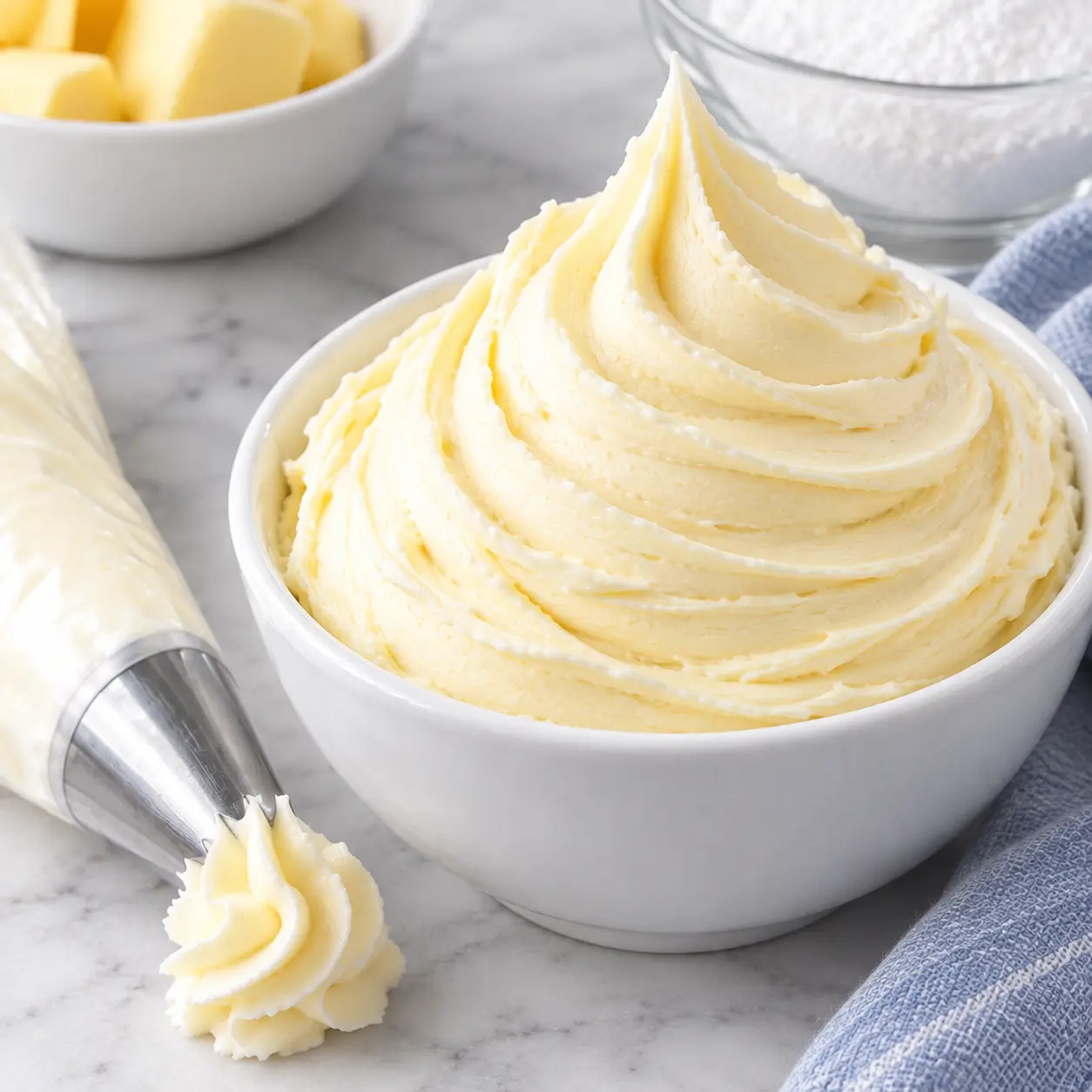
French Buttercream
Ingredients
Equipment
Method
- Whip the egg yolks in a stand mixer until pale and slightly thickened.
- Cook the granulated sugar with 2 tablespoons of water to 238°F.
- Slowly pour the hot syrup into the whipping yolks, then whip until the bowl is close to room temperature.
- Add the softened butter one tablespoon at a time and beat until smooth.
- Beat in the vanilla extract and salt, then use the buttercream on a cool cake or cupcakes.
- Refrigerate leftovers for up to 3 days and rewhip before using.
Nutrition
Notes
- Use a thermometer to reach 238°F for the sugar syrup.
- Let the yolk mixture cool before adding butter so the frosting does not become loose.
- Discard frosting left at room temperature for more than 2 hours.