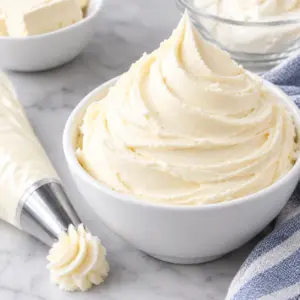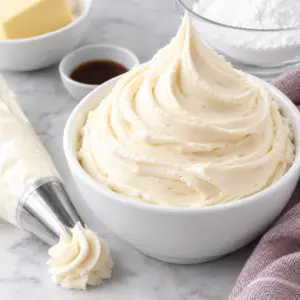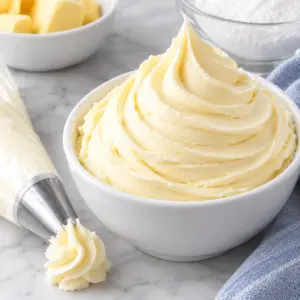

Introduction to Swiss Meringue Buttercream
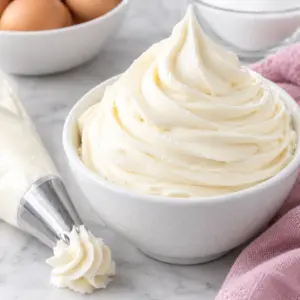
Swiss meringue buttercream is a smooth, lightly sweet frosting made by warming egg whites and sugar before whipping them into a glossy meringue. Softened butter is then added gradually, creating a creamy frosting that spreads easily and holds its shape on cakes and cupcakes.
This method takes a little more attention than a simple powdered-sugar frosting, but the result is worth it. The sugar dissolves into the egg whites, so the finished buttercream has a fine texture without the gritty feel that can sometimes come with other frostings. It is also easy to pipe, tint, and flavor.
Why You'll Love This Swiss Meringue Buttercream
- The texture is smooth, airy, and creamy rather than heavy.
- Heating the egg whites and sugar gives you a safer, more reliable meringue base.
- The frosting is sweet enough for cake without overpowering it.
- It spreads neatly and holds piped swirls well.
- You can make it ahead and bring it back to a workable texture before decorating.
Ingredients for Swiss Meringue Buttercream
- 4 large egg whites
- 1 cup granulated sugar
- 1 cup unsalted butter, softened
- 2 tsp vanilla extract
- Pinch of salt
Use 4 large egg whites, 1 cup granulated sugar, 1 cup unsalted butter, softened, 2 tsp vanilla extract, and Pinch of salt. Fresh egg whites whip well, and separating them while cold is easiest; let them come to room temperature before beginning. Choose unsalted butter so you can control the seasoning, and soften it until it is pliable but not oily or melted.
How to Make Swiss Meringue Buttercream
Step 1: Set Up the Double Boiler
Fill a medium saucepan with 1 to 2 inches of water and bring it to a gentle simmer. The water should not touch the bottom of the heatproof mixing bowl you will use. Before you start, make sure the bowl and whisk are clean and completely free of grease, since even a small amount of fat can keep the egg whites from whipping properly.
Step 2: Heat the Egg Whites and Sugar
Add 4 large egg whites and 1 cup granulated sugar to the heatproof bowl. Set the bowl over the simmering water and whisk constantly. Continue heating until the sugar has dissolved and the mixture reaches 160°F on an instant-read thermometer, which usually takes about 5 to 8 minutes. If you do not have a thermometer, rub a little mixture between clean fingers; it should feel smooth rather than grainy, though a thermometer is the more dependable food-safety check.
Step 3: Whip the Meringue
Transfer the hot mixture to a stand mixer fitted with a whisk attachment, or use a large bowl and a hand mixer. Whip on medium-high speed for 8 to 12 minutes, until the meringue is bright white, glossy, and holding firm peaks. Keep whipping until the outside of the bowl feels neutral or cool to the touch. The meringue must cool before butter is added, or the butter may melt and make the frosting loose.
Step 4: Add the Butter Slowly
Switch to the paddle attachment if using a stand mixer. Add 1 cup unsalted butter, softened, one tablespoon at a time, mixing on medium speed after each addition. Wait until each piece is mostly incorporated before adding the next. The mixture may look curdled, thin, or separated during this stage. That is normal; continue mixing steadily as the buttercream comes together.
Step 5: Flavor and Finish
Once the buttercream looks smooth and holds its shape, add 2 tsp vanilla extract and Pinch of salt. Mix on low speed for about 1 minute, then increase to medium for another 1 to 2 minutes. This removes large air pockets and gives the frosting a more even texture. Scrape down the bowl as needed so the flavoring and butter are mixed evenly.
Step 6: Use or Store the Frosting
Use the buttercream right away to fill, frost, or pipe onto a completely cooled cake or cupcakes. If it seems too soft, refrigerate it for 10 to 15 minutes, then mix again. For storage, place it in an airtight container and refrigerate for up to 5 days. Let it sit at room temperature until softened, then beat it again before using.
Tips for Success
- Use a clean glass or metal bowl for the meringue. Plastic bowls can retain traces of grease even after washing.
- Do not rush the heating step. The sugar should dissolve fully, and the egg-white mixture should reach 160°F before whipping.
- Butter that is too cold will leave lumps, while butter that is melted can make the buttercream soupy. It should bend easily when pressed.
- If the buttercream looks curdled, keep mixing. The mixture often passes through an uneven stage before becoming smooth.
- If the finished frosting is too soft, chill it briefly. If it is too firm, let it warm for a few minutes and mix again.
- Always frost a fully cooled cake. Warm cake can soften the buttercream and cause layers or piped decorations to slide.
Equipment Needed
- Heatproof mixing bowl
- Medium saucepan
- Instant-read thermometer
Variations
- For chocolate buttercream, mix in 4 ounces of cooled, melted semisweet chocolate after the buttercream is smooth.
- For berry flavor, add 2 to 3 tablespoons of thick seedless berry jam and mix until evenly incorporated.
- For lemon buttercream, replace half of the vanilla with 1 tablespoon of finely grated lemon zest and add 1 teaspoon of lemon juice.
- For coffee flavor, dissolve 2 teaspoons of instant espresso powder in the vanilla before adding it to the bowl.
- For a simple color change, use gel food coloring a little at a time after the buttercream is fully mixed. Gel coloring adds color without thinning the frosting.
Serving Suggestions
This recipe makes enough buttercream to fill and frost one 8-inch two-layer cake with a modest finish, or to generously frost about 24 cupcakes. Spread it between cake layers, smooth it over the outside, or pipe simple rosettes and swirls. The flavor is especially good with vanilla, chocolate, spice, carrot, and berry cakes. Keep frosted desserts refrigerated if they will sit for more than a couple of hours in a warm room, and let them stand at room temperature briefly before serving for the softest texture.
FAQs about Swiss Meringue Buttercream
Can I make Swiss meringue buttercream without a stand mixer? Yes. A hand mixer works well, but whipping the meringue and adding the butter takes some time. Use a large bowl so the beaters can move freely, and scrape the sides often.
Why did my Swiss meringue buttercream turn soupy? The meringue may still have been warm when the butter was added, or the butter may have been too soft. Chill the bowl for 10 to 15 minutes, then continue mixing. It should thicken as the mixture cools.
Why does the buttercream look curdled? Curdling is a common stage when butter is incorporated into the meringue. Keep mixing for several minutes. If the bowl feels cold and the mixture remains curdled, warm the outside of the bowl briefly with a towel or let it stand at room temperature, then mix again.
How long can Swiss meringue buttercream sit out? For best quality, use it the same day. Because it contains egg whites and butter, refrigerate the frosting or any frosted dessert if it will not be served within about 2 hours, or within 1 hour when the room is above 90°F.
Can I prepare this buttercream ahead of time? Yes. Refrigerate it in an airtight container for up to 5 days, or freeze it for up to 1 month. Thaw frozen buttercream in the refrigerator, bring it toward room temperature, and beat it again until smooth before using.
Final Thoughts
Swiss meringue buttercream rewards a steady pace more than complicated technique. Check the temperature carefully, cool the meringue before adding butter, and keep mixing through any curdled-looking stage. Once smooth, it gives cakes and cupcakes a polished finish with a soft, creamy texture.
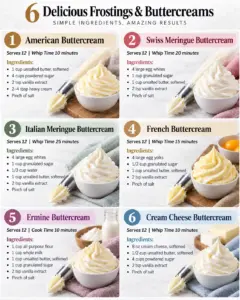
Looking for more? This recipe is part of our roundup of 6 Delicious Frostings & Buttercreams For Every Cake Worth Sharing.
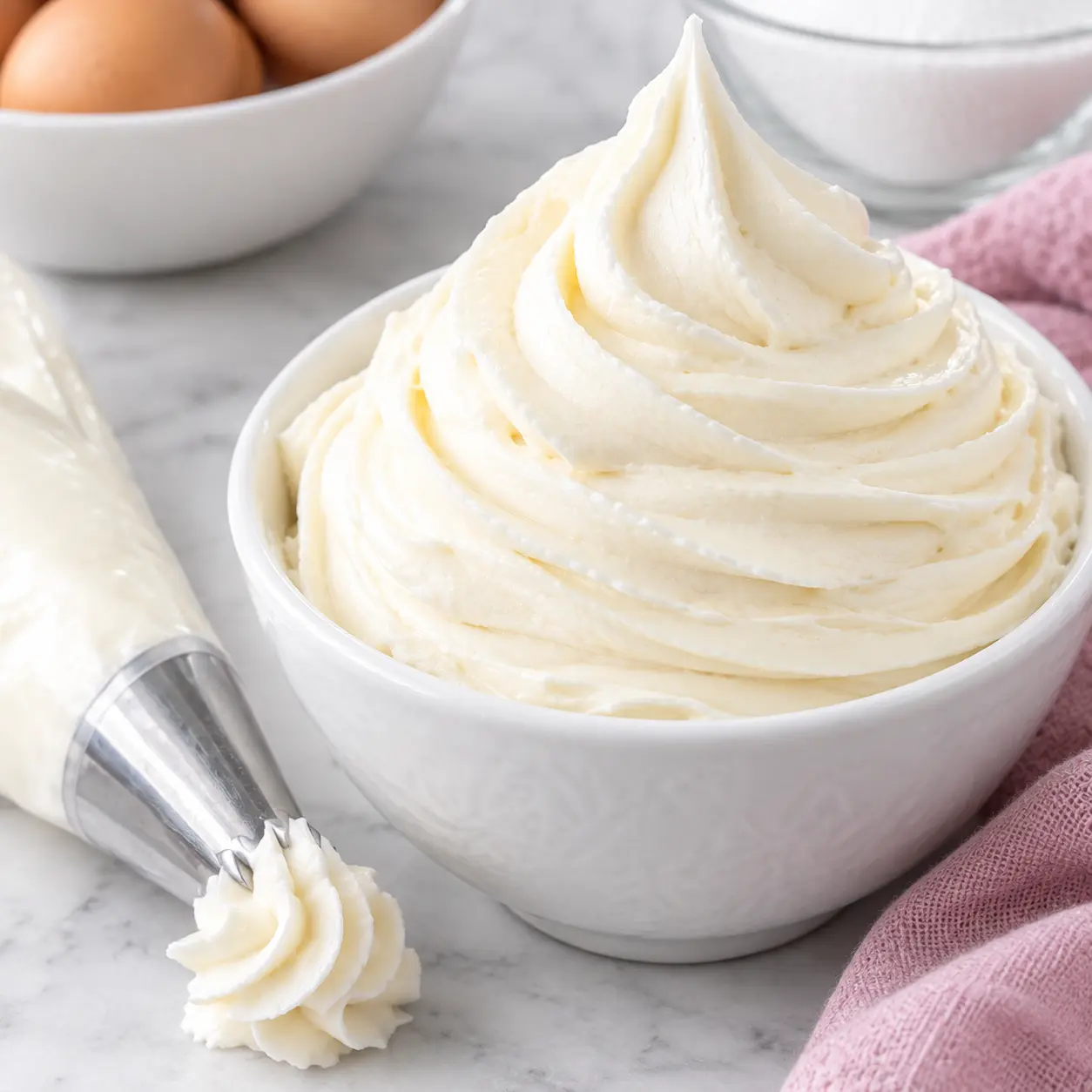
Swiss Meringue Buttercream
Ingredients
Equipment
Method
- Heat the egg whites and sugar over a simmering water bath, whisking constantly, until smooth and 160°F.
- Whip the mixture to firm, cool peaks, then add softened butter gradually before mixing in vanilla and salt.
Nutrition
Notes
- The meringue must cool before butter is added.
- If the frosting looks curdled, continue mixing until smooth.
- Refrigerate leftovers in an airtight container for up to 5 days and rewhip before using.