

As I uncovered the vibrant world of Persian cuisine, I stumbled upon Khoresh Bademjan, a heartwarming eggplant stew that has swiftly become a cherished favorite. This dish isn’t just a feast for the palate; it offers the perfect blend of rich flavors and cozy textures to brighten any day. Whether you opt for tender lamb or a vegan twist with nutrient-rich legumes, Khoresh Bademjan is high in protein and gluten-free, making it a wholesome choice for everyone. Imagine savoring every bite alongside fluffy saffron rice and crispy tahdig—an experience that not only nourishes but connects you to the essence of traditional hospitality. Are you ready to dive into this comforting culinary journey?

Why is Khoresh Bademjan a must-try?
Rich, Comforting Flavor: Each spoonful of Khoresh Bademjan delivers an incredible medley of spices and tender eggplant harmonizing beautifully with savory lamb or hearty legumes.
Versatility for Every Palate: Whether you’re in the mood for a meaty stew or a vegan delight, this dish easily accommodates your preferences, making it suitable for any dinner table.
High in Protein: Packed with wholesome ingredients, expect this stew to be not only delicious but also a nutritious option, perfect for a satisfying meal.
Crowd-Pleasing Delight: Perfect for gatherings, Khoresh Bademjan opens the door to the rich traditions of Persian hospitality, making it a hit at family feasts or dinner parties.
Ease of Preparation: With straightforward steps, this recipe simplifies your cooking experience, allowing you to focus on enjoying the rich flavors rather than stressing in the kitchen.
Get ready to impress your guests or treat yourself with this delightful dish. If you’re also interested in how to store your leftovers for later enjoyment, check out our tips for best practices!
Khoresh Bademjan Ingredients
For the Stew
- Olive Oil – Adds richness and depth; substitute with vegetable oil if needed.
- Onions – Provides sweetness and flavor; use yellow or white onions; shallots can be a substitute.
- Cherry Tomatoes – Adds brightness and acidity; substitute with grape tomatoes or canned tomatoes if unavailable.
- Garlic – Enhances the flavor profile; no substitute needed, but minced garlic can be used instead of grated.
- Lamb Stew Meat – Main protein source; alternatives include beef, chicken, or omit for a vegan version.
- Advieh – A Persian spice mix; can be replaced with a mild spice blend if not available.
- Turmeric – Provides warmth and color.
- Ground Black Pepper – Offers mild heat.
- Salt – Enhances overall flavor.
- Water – Adjust as needed for stew consistency.
- Tomato Sauce – Adds body and flavor; can be substituted with fresh chopped tomatoes.
- Dried Limes – Gives a unique tang; substitute with lime juice if necessary.
- Saffron (optional) – Adds aromatic flavor and color; not necessary for flavor but essential for authenticity.
- Lime Juice – Adds brightness; can adjust to taste.
- Eggplants – Main vegetable; use globe or any variety available.
For Serving
- Saffron Rice – Complements the stew’s flavors beautifully; always a staple in Persian meals.
- Crispy Tahdig – Adds a delightful crunch that contrasts wonderfully with the tender stew.
Step-by-Step Instructions for Khoresh Bademjan: Hearty Persian Eggplant Stew
Step 1: Sauté the Onions
Heat 2 tablespoons of olive oil in a Dutch oven over medium heat. Add a third of the sliced onions and sauté for about 8-10 minutes until golden brown. This initial step builds the flavor base for your Khoresh Bademjan. Once browned, remove the onions and set them aside for later.
Step 2: Char the Cherry Tomatoes
In the same pot, add the cherry tomatoes and cook for about 5 minutes, stirring occasionally until they start to char and burst. Their bright acidity will contribute a fresh note to the stew. Once charred, remove them from the pot and set aside with the sautéed onions.
Step 3: Cook the Remaining Onions and Garlic
Add the remaining sliced onions to the pot, stirring occasionally for about 5-7 minutes until they become translucent. Next, add the grated garlic and cook for an additional minute, allowing the aromatic essence to infuse the stew. This fragrant mix is essential for the depth of flavor in Khoresh Bademjan.
Step 4: Sear the Lamb
Add the lamb stew meat to the onions and cook for about 8-10 minutes, searing until the pieces are browned on all sides. This step locks in the juices and enhances the richness of the stew. Once seared, proceed to introduce the spices for a savory kick.
Step 5: Incorporate Spices and Liquid
Sprinkle in the advieh, turmeric, salt, and ground black pepper to the pot, stirring to coat the lamb evenly. Pour in 2 cups of water and the tomato sauce, followed by the dried limes. Bring the mixture to a boil over high heat, then reduce to a gentle simmer, allowing the flavors to meld for about 1.5 hours.
Step 6: Roast the Eggplants
While the stew simmers, prepare the eggplants by slicing them into rounds. Brush each slice with olive oil and place them on a baking sheet. Roast in a preheated oven at 425°F for about 25 minutes until they are golden and tender. Roasting brings out the eggplants’ unique flavor, perfect for finishing the Khoresh Bademjan.
Step 7: Combine Eggplants with the Stew
Once roasted, carefully add the eggplant slices to the simmering stew along with the lime juice. Stir gently to combine and let the Khoresh Bademjan simmer for another 30 minutes, allowing the eggplants to absorb the rich flavors. The stew will become thick and fragrant during this time.
Step 8: Adjust Seasoning and Serve
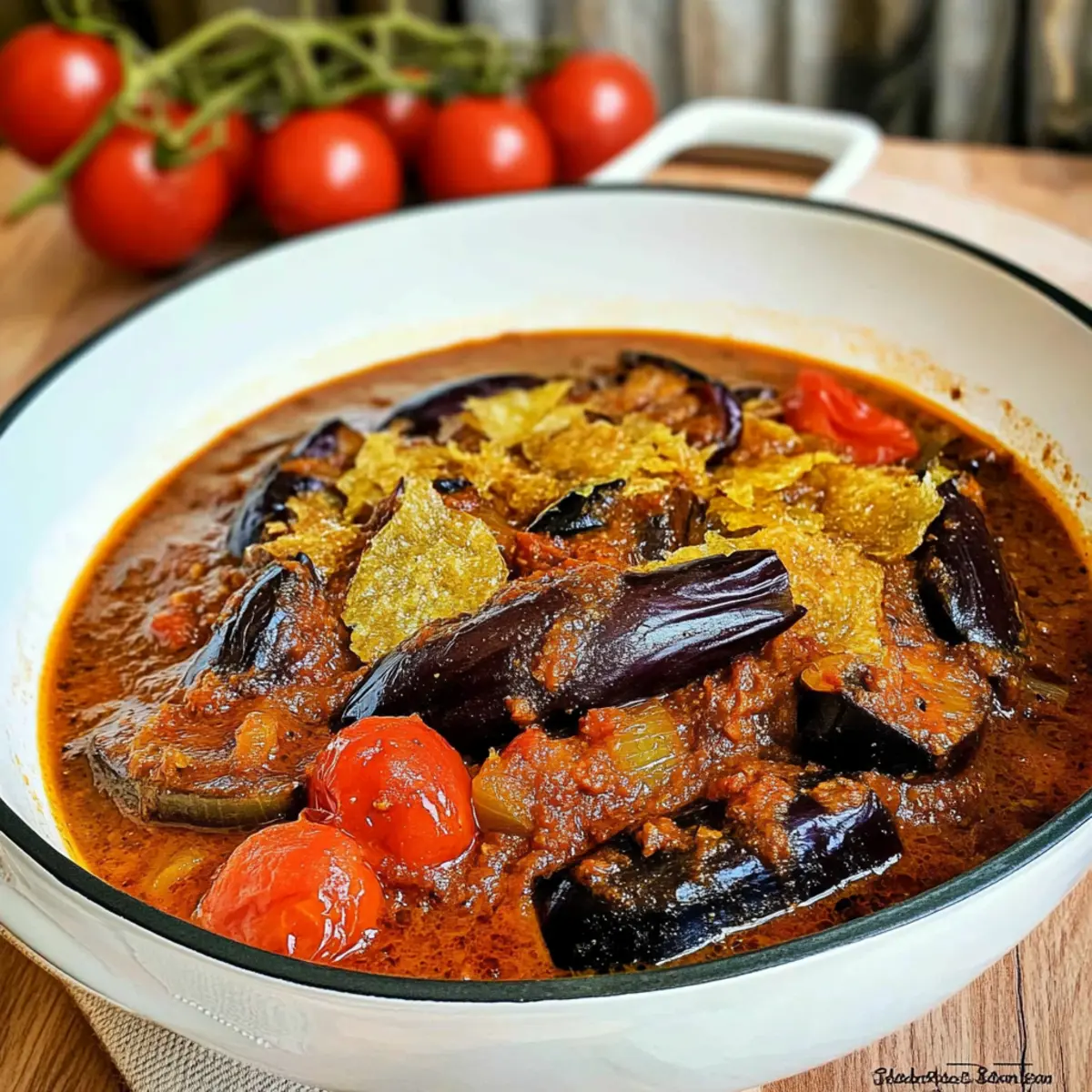
After simmering, taste the stew and adjust seasoning as necessary. Serve Khoresh Bademjan hot, garnished with the reserved sautéed onions and charred cherry tomatoes. This hearty Persian eggplant stew pairs beautifully with fluffy saffron rice and crispy tahdig, creating a comforting meal for family and friends.
Expert Tips for Khoresh Bademjan
-
Brown the Meat: Ensure the lamb is browned on the outside but not overcooked to lock in moisture and enhance flavor.
-
Roast the Eggplants: Roast until fork-tender to deepen their flavor and prevent excess moisture, which could lead to a soggy stew.
-
Vegan Considerations: For a plant-based version of Khoresh Bademjan, substitute meat with legumes like chickpeas or yellow split peas for added nutrition.
-
Season Gradually: Adjust the seasoning at the end of cooking—this enhances the overall taste and ensures your stew is perfectly balanced.
-
Temperature Check: Simmer gently to allow the flavors to meld beautifully; avoid boiling as it can toughen the meat and disrupt texture.
What to Serve with Khoresh Bademjan
Bring your dining experience to life with delightful accompaniments that elevate the comforting essence of this Persian stew.
-
Fluffy Saffron Rice: The fragrant threads of saffron harmonize beautifully with the rich stew, providing a perfect canvas for the dish’s bold flavors.
-
Crispy Tahdig: This perfectly golden, crunchy rice base offers a delightful contrast to the tender eggplant and succulent meat, making every bite an adventure.
-
Sweet and Tangy Pickles: Serving pickled vegetables alongside Khoresh Bademjan adds a refreshing crunch that balances the stew’s savory richness, enhancing your overall meal experience.
-
Herb-Infused Salad: A vibrant salad with fresh herbs like mint and parsley complements the stew’s deep flavors, adding brightness and texture to your plate.
-
Warm Pita Bread: Soft, warm pita acts as an excellent vehicle for scooping up the stew, creating a wonderful full-mouthed experience with each bite.
-
Persian Yogurt (+ Cucumber): A dollop of creamy yogurt laced with cooled cucumber not only cools the palate but adds a creamy texture that contrasts beautifully with the stew.
These pairings promise a comforting and hearty meal that’s sure to leave everyone at your table satisfied and happy.
How to Store and Freeze Khoresh Bademjan
Fridge: Store leftover Khoresh Bademjan in an airtight container for up to 4-5 days. Reheat gently on the stovetop or in the microwave, adding a splash of water if needed for moisture.
Freezer: This hearty Persian eggplant stew freezes well for up to 2 months. Allow it to cool completely before transferring to freezer-safe containers, leaving some space for expansion.
Thawing: To enjoy your frozen Khoresh Bademjan, thaw it overnight in the fridge. Reheat thoroughly on the stovetop, stirring occasionally for even heating.
Make-Ahead Tip: Consider preparing a double batch and freezing half for a busy day! This way, you can relish the deliciousness without the effort when time is tight.
Khoresh Bademjan Variations & Substitutions
Feel free to explore delightful twists on your Khoresh Bademjan, making it uniquely yours with each comforting bowl.
-
Meat Alternatives: Replace lamb with beef or chicken for a different protein profile. Beef offers a rich flavor, while chicken provides a lighter option.
-
Vegan Delight: Opt for yellow split peas or chickpeas to create a wonderful plant-based version. They soak up the stew’s spices beautifully, adding heartiness and nutrition.
-
Eggplant Varieties: Experiment with different kinds of eggplants, like Asian or Japanese varieties, for unique flavors and textures. Each type will contribute its own distinct taste to your dish.
-
Spice Boost: Add a pinch of cinnamon or a dash of cayenne for an exciting flavor kick. These spices can elevate the dish and add warmth that resonates with Persian culinary traditions.
-
Citrus Swap: If dried limes aren’t available, substitute with lemon or lime juice. This change brightens the dish while retaining its delightful tanginess.
-
Extra Veggies: Fold in diced zucchini or bell peppers to enhance nutrition and color. This addition is a wonderful way to sneak in some extra veggies while diversifying the stew’s texture.
-
Flavor Enhancer: Incorporate a splash of pomegranate molasses for a sweet-tart finish. This vibrant ingredient adds depth and complexity that will leave your guests asking for the recipe.
Feel inspired to customize this beloved dish, and if you’re looking for more delicious Persian flavors, don’t miss our guide on making the perfect saffron rice!
Make Ahead Options
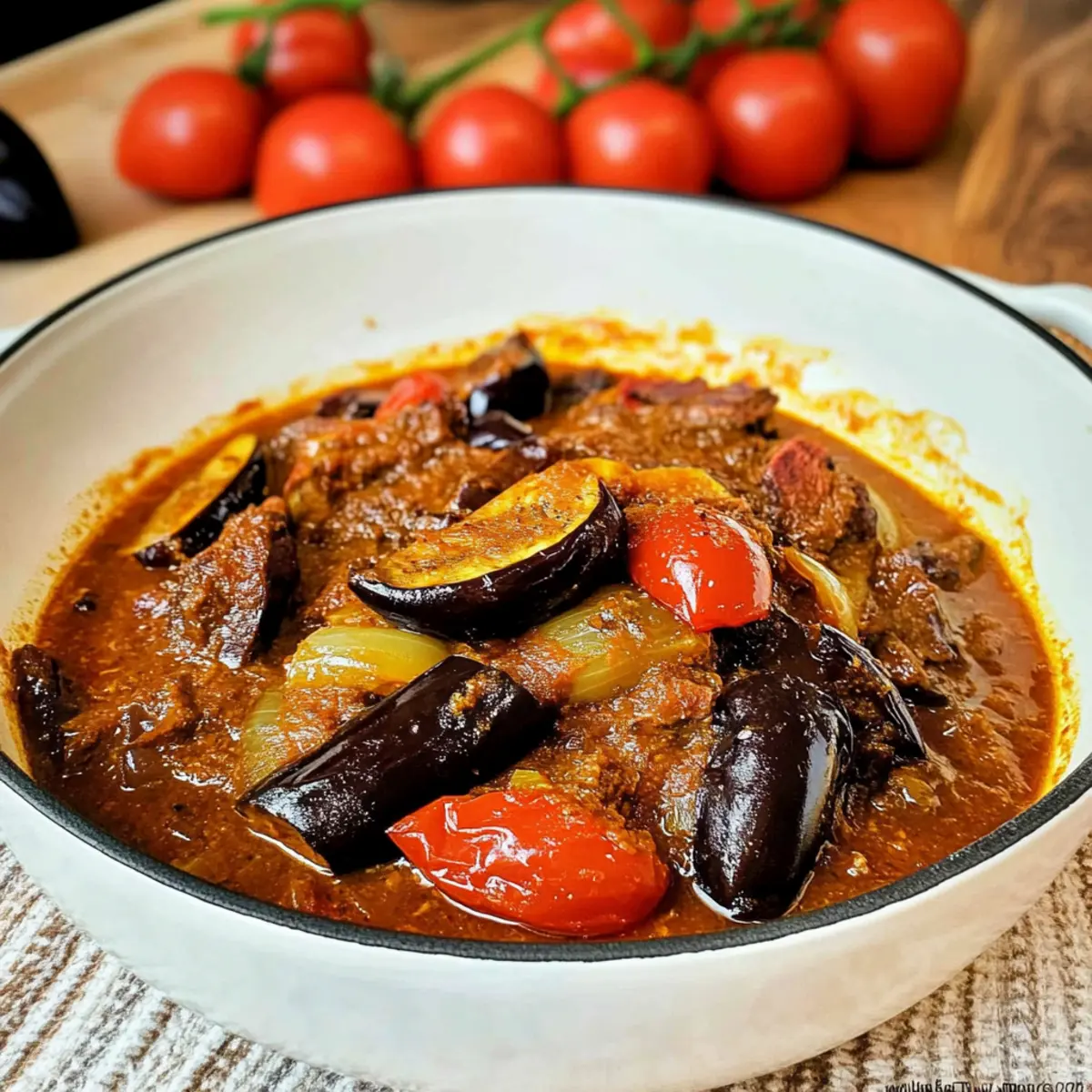
Preparing Khoresh Bademjan ahead of time is a wonderful way to save precious moments during busy weeknights! You can chop the onions, slice the eggplants, and prepare the spices up to 24 hours in advance, storing them separately in the refrigerator to maintain freshness and flavor. If you’re using lamb, consider browning it and then refrigerating it for up to 3 days before simmering. To finish your dish, simply reheat the stew on the stovetop, gently adding any prepared vegetables at the last minute to warm through without losing texture. Trust me, the end result will be just as delicious, keeping your Khoresh Bademjan ready to serve at a moment’s notice!
Khoresh Bademjan: Hearty Persian Eggplant Stew Recipe FAQs
How do I choose ripe eggplants for Khoresh Bademjan?
When selecting eggplants, look for smooth, shiny skin without dark spots or blemishes; they should feel firm but slightly give when pressed. A fresh eggplant will also have a green stem and should feel heavy for its size. If you come across an eggplant that’s less than perfect, just remember that it can still taste great when cooked!
What is the best way to store leftovers of Khoresh Bademjan?
Absolutely! Store leftover Khoresh Bademjan in an airtight container in the refrigerator for up to 4-5 days. When you’re ready to enjoy, just reheat it gently on the stovetop. If you notice it’s a bit thick, don’t hesitate to add a splash of water or broth to bring it back to your desired consistency.
Can I freeze Khoresh Bademjan?
Yes, you can freeze Khoresh Bademjan! Allow it to cool completely, then transfer it to freezer-safe containers. Make sure to leave some space for expansion. This dish can be frozen for up to 2 months. When you’re ready to enjoy, thaw it overnight in the fridge and reheat on low heat, stirring occasionally until warmed through.
What should I do if my stew is too watery?
If you find that your Khoresh Bademjan is too watery, don’t worry! You can thicken it by simmering it uncovered for an additional 15-20 minutes on low heat. This will help reduce excess liquid. Alternatively, you can mash some of the eggplant into the stew, which will naturally help to thicken the consistency while adding flavor.
Are there any dietary considerations for Khoresh Bademjan?
Absolutely! Khoresh Bademjan is inherently gluten-free and can be made vegan by omitting the lamb and substituting it with legumes like chickpeas or yellow split peas. If you have allergies, be sure to double-check your spice mixes for any hidden gluten or preservatives, and feel free to customize the dish with your favorite proteins.
How can I adjust the spice level in Khoresh Bademjan?
To adjust the spice level in your Khoresh Bademjan, consider starting with a small amount of advieh and gradually adding more as it cooks. You can also incorporate a pinch of red pepper flakes for an added kick. For a milder version, stick with fewer spices or opt for a sweeter blend of spices that won’t overpower the dish. Your taste buds will thank you for finding that perfect balance!
Khoresh Bademjan: Comforting Persian Eggplant Stew Recipe
Ingredients
Equipment
Method
- Heat 2 tablespoons of olive oil in a Dutch oven over medium heat. Add a third of the sliced onions and sauté for about 8-10 minutes until golden brown. Remove the onions and set them aside.
- In the same pot, add the cherry tomatoes and cook for about 5 minutes, stirring occasionally until they start to char and burst. Remove them from the pot and set aside.
- Add the remaining sliced onions to the pot, stir occasionally for about 5-7 minutes until translucent. Then add grated garlic and cook for an additional minute.
- Add the lamb stew meat to the onions and cook for about 8-10 minutes, searing until browned on all sides.
- Sprinkle in advieh, turmeric, salt, and ground black pepper, stirring to coat the lamb. Pour in 2 cups of water and the tomato sauce, followed by dried limes. Bring to a boil, then reduce to a gentle simmer for about 1.5 hours.
- Slice the eggplants into rounds, brush each slice with olive oil, and roast in a preheated oven at 425°F for about 25 minutes until golden and tender.
- Once roasted, carefully add eggplant slices to the stew with lime juice. Stir gently and let it simmer for another 30 minutes.
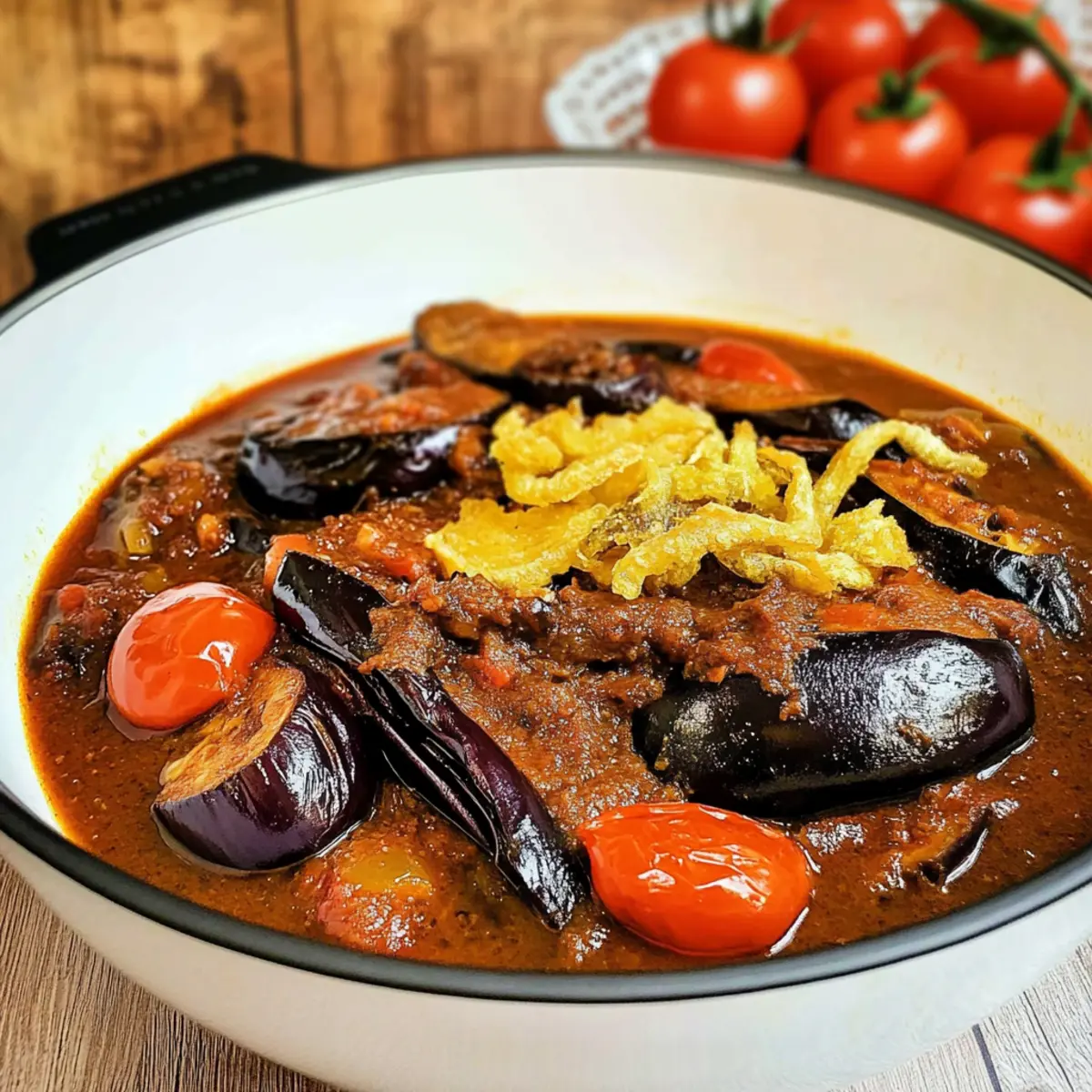
- Taste the stew and adjust seasoning as necessary. Serve hot, garnished with reserved onions and charred tomatoes, alongside saffron rice and crispy tahdig.