

Stepping into my kitchen, the air bursting with umami notes, I couldn’t help but smile at the sight of some humble ingredients ready to transform into something magical. These Authentic Japanese Ramen Eggs (Ajitama) promise a delightful experience, delivering rich, jammy yolks nestled in umami-rich whites that elevate any bowl of ramen to extraordinary heights. Plus, they’re incredibly quick to prepare and remarkably versatile—perfect for topping your favorite noodle dish or just enjoyed as a savory snack. With a little patience to marinate, you can savor these eggs in salads, sandwiches, or all on their own. Are you ready to unlock this secret ingredient and add a touch of culinary magic to your meals?

Why Are Ramen Eggs So Irresistible?
Transformative Taste: The umami-packed marinade gives these eggs a flavor that’s nothing short of addictive, making them a must-have for any ramen enthusiast.
Quick & Easy: You only need a few ingredients and minimal prep time to achieve restaurant-worthy results right at home.
Versatile Use: Whether you add them to ramen, salads, or sandwiches, these eggs can enhance a variety of dishes, allowing flexibility in your meal planning.
Make-Ahead Magic: Perfect for busy lifestyles, these eggs can be marinated in advance and stored, making them a convenient option for a quick snack or gourmet topping.
Crowd Pleaser: Impress family and friends with these delicious gems; they’re sure to become the highlight of your next dinner gathering!
For more inspiration, try adding these flavors to your dishes similar to why Cooker Beef Ramen or perhaps try a Chicken Ramen Stir for fun ideas!
Ramen Egg Ingredients
For the Marinade
• Low Sodium Chicken Stock – Adds depth and savory flavor to the marinade; substitute with shiitake mushroom stock for a vegetarian option.
• Soy Sauce – Provides umami and saltiness to the marinade; use tamari for a gluten-free version.
• Sake – Contributes a unique flavor profile while aiding in the tenderizing of the egg white; for a non-alcoholic option, use a mixture of rice vinegar and water.
• Evaporated Cane Sugar – Balances the saltiness of the soy and savoriness of the chicken stock; brown sugar can be an alternative.
• Ginger – Adds aromatic spice and warmth to the marinade; can be omitted for a milder flavor.
For the Eggs
• Large Eggs – The central ingredient providing creaminess and rich flavor; use fresh eggs for better peeling results.
Unlock the magic of Ramen Eggs with these simple ingredients!
Step‑by‑Step Instructions for Ramen Egg
Step 1: Prepare Marinade
In a small saucepan, combine low sodium chicken stock, soy sauce, sake, evaporated cane sugar, and ginger. Heat over medium-high heat until the mixture reaches a gentle boil, letting it simmer for about 2 minutes to allow the alcohol to evaporate. Once fragrant, remove from heat and let the marinade cool completely.
Step 2: Crack Eggs
Using the back of a spoon, gently tap the bottom of each large egg to create a small divot. This technique promotes better peeling later on, ensuring that you can enjoy the perfect consistency of your Ramen Egg. Once prepared, set the eggs aside to move on to the boiling process.
Step 3: Boil Eggs
Fill a pot with about 2 inches of water and bring it to a rolling boil over medium heat. Once boiling, carefully add the prepared eggs, cover the pot with a lid, and turn off the heat. Set a timer for 5-6 minutes; this duration will yield soft-boiled eggs with jammy yolks, which are ideal for your Ramen Egg.
Step 4: Cool Eggs
After the timer goes off, immediately transfer the eggs into an ice water bath. Allow them to cool for at least 20 minutes, which will halt the cooking process and make peeling significantly easier. This cooling step is crucial for achieving the perfect texture and flavor in your Ramen Eggs.
Step 5: Peel Eggs
Once cooled, gently crack the eggshells, starting from the bottom where you made the divot. Carefully peel away the shells, being mindful to remove any membranes attached to the egg. Enjoy the satisfaction of revealing perfectly soft-boiled whites that will engulf the rich, jammy yolk inside your Ramen Egg.
Step 6: Marinate Eggs
Place the peeled eggs into a zipper-sealed bag, ensuring they fit snugly but not tightly. Pour the cooled marinade over the eggs, seal the bag while expelling excess air, and refrigerate. Allow the eggs to marinate for 8-12 hours, soaking up the flavors that will make these Ramen Eggs a delicious treat.
Step 7: Store
After marinating, transfer the eggs to an airtight container if not consumed immediately, and store them in the refrigerator. These flavorsome Ramen Eggs can be kept for up to 3 days, allowing you to enjoy them as a gourmet topping for ramen, a protein boost in salads, or as a savory snack on their own.

Ramen Egg Variations & Substitutions
Feel free to get creative with your Ramen Eggs! Each variation adds a personal touch that brings excitement to your cooking.
- Dashi Stock: Swap chicken stock for dashi to embrace a more traditional Japanese flavor that enhances umami depth.
- Gluten-Free Swap: Use tamari instead of soy sauce, maintaining the savory essence while accommodating gluten sensitivities.
- Miso Twist: Incorporate a spoonful of miso into your marinade; it adds a creamy texture and a unique umami profile, takes your eggs to the next level!
Imagine how this rich flavor will elevate your dishes, much like finding that perfect seasoning blend that transforms a meal.
- Mirin Boost: Add a splash of mirin for a sweet touch in the marinade, making the eggs even more delightful in dishes.
- Spicy Kick: Toss in some chili flakes or sriracha into the marinade. The gentle heat will tantalize your taste buds!
The combination of flavors can create an unexpected twist that complements your ramen beautifully.
- Herbal Infusion: Include fresh herbs like cilantro or green onions in the marinade for added freshness and a burst of color.
- Smoky Flavor: A touch of smoked soy sauce can introduce a layering taste that pairs well with the rich egg yolks.
With all these options, you’ll never be short of ways to enjoy your delicious Ramen Eggs. Don’t forget to check out other delightful recipes like Slow Cooker Beef Ramen or the quick and easy Chicken Ramen Stir for more inspiration!
What to Serve with Authentic Japanese Ramen Eggs (Ajitama)
Delight your taste buds by pairing these umami-rich eggs with complementary dishes that elevate your meal to gourmet status.
- Creamy Miso Soup: The warm, rich broth enhances the savory notes of the Ramen Eggs, creating a comforting start to your meal.
- Fresh Vegetable Salad: Crisp, bright vegetables add a refreshing contrast, balancing the indulgent flavors of the marinated eggs in a nutritious way.
- Soba Noodles: These nutty, buckwheat noodles provide a lovely texture and flavor that pairs well with the silky eggs, adding heartiness to your lunch or dinner.
- Gyoza: Crispy and savory, these dumplings make for a delightful side that nicely contrasts the soft, creamy texture of the Ramen Eggs.
- Teriyaki Chicken: The sweet and savory chicken complements the umami richness of the eggs, making for a perfectly delicious pairing.
- Chilled Green Tea: A refreshing drink that cleanses the palate between bites and enhances the overall dining experience with its earthy flavor.
These pairings not only maintain harmony on your plate but also bring an exciting burst of flavor and texture to your dining table. Enjoy experimenting!
Expert Tips for Ramen Eggs
• Crack Technique: Ensure you create a small divot at the bottom of each egg to facilitate easier peeling—this avoids any frustrating shell mishaps.
• Perfect Timing: Cooking times may vary based on egg size and stove efficiency; adjust your boiling time to achieve that perfect jammy yolk for your Ramen Eggs.
• Ice Bath Importance: Always cool your eggs in an ice water bath for at least 20 minutes; this stops the cooking process and helps maintain the ideal texture.
• Fresh Ingredients Matter: For best results, use fresh eggs; they peel more easily and provide that creamy, rich flavor essential for delicious Ramen Eggs.
• Marinating Magic: Don’t rush the marination process; allowing the eggs to sit in the marinade for 8-12 hours brings out the full umami flavor, making them truly irresistible!
How to Store and Freeze Ramen Eggs
Fridge: Store marinated Ramen Eggs in an airtight container in the refrigerator for up to 3 days. This keeps them fresh and ready to enjoy in meals.
Make-Ahead: Ramen Eggs can be prepared in advance; marinate them for 8-12 hours beforehand, making mealtime quick and easy when you’re ready to serve.
Freezer: For longer storage, freeze unpeeled boiled eggs in a freezer-safe bag for up to 3 months. Thaw them in the fridge overnight before marinating.
Reheating: If you’ve stored Ramen Eggs in the fridge, simply slice them and enjoy cold, or bring them to room temperature before adding to your dish for the best flavor.
Make Ahead Options
These Ramen Eggs are perfect for meal prep enthusiasts looking to save time during busy weeknights! You can boil and peel the eggs up to 24 hours in advance, ensuring they’re ready when you need them. Simply follow the boiling and cooling instructions, then store the cooled eggs in an airtight container in the refrigerator. After peeling, marinate the eggs in the flavorful mixture for 8-12 hours, allowing them to soak up the delicious marinade. When you’re ready to serve, just remove the eggs from the marinade and add them to your ramen or salad. With this prep, you’ll have gourmet-quality Ramen Eggs at your fingertips and very little effort when mealtime approaches!

Ramen Egg Recipe FAQs
What kind of eggs should I use for Ramen Eggs?
I recommend using large, fresh eggs for your Ramen Eggs. Fresh eggs have stronger whites, which makes peeling easier after boiling. Look for eggs without dark spots or blemishes for the best results.
How long can I store Ramen Eggs?
After marinating, you can store your Ramen Eggs in an airtight container in the refrigerator for up to 3 days. This ensures they stay fresh and ready to elevate your meals whenever you’re in the mood for their delicious umami flavor.
Can I freeze Ramen Eggs?
Absolutely! For longer storage, you can freeze unpeeled boiled eggs in a freezer-safe bag for up to 3 months. When you’re ready to enjoy them, remove them from the freezer and let them thaw in the fridge overnight before marinating them. This method allows you to savor the magic of Ramen Eggs even later!
What if my eggs crack while boiling?
If your eggs crack while boiling, don’t worry! This happens occasionally, but to minimize the chances, make sure you create a small divot at the bottom of each egg before boiling. Additionally, avoid extreme temperature changes by using room temperature eggs in a gently simmering pot of water to reduce stress on the shells.
Can I make Ramen Eggs vegetarian or gluten-free?
Certainly! To make a vegetarian version, substitute the low sodium chicken stock with shiitake mushroom stock. For a gluten-free alternative, simply use tamari in place of soy sauce. You can still enjoy the rich umami flavor while catering to your dietary needs!
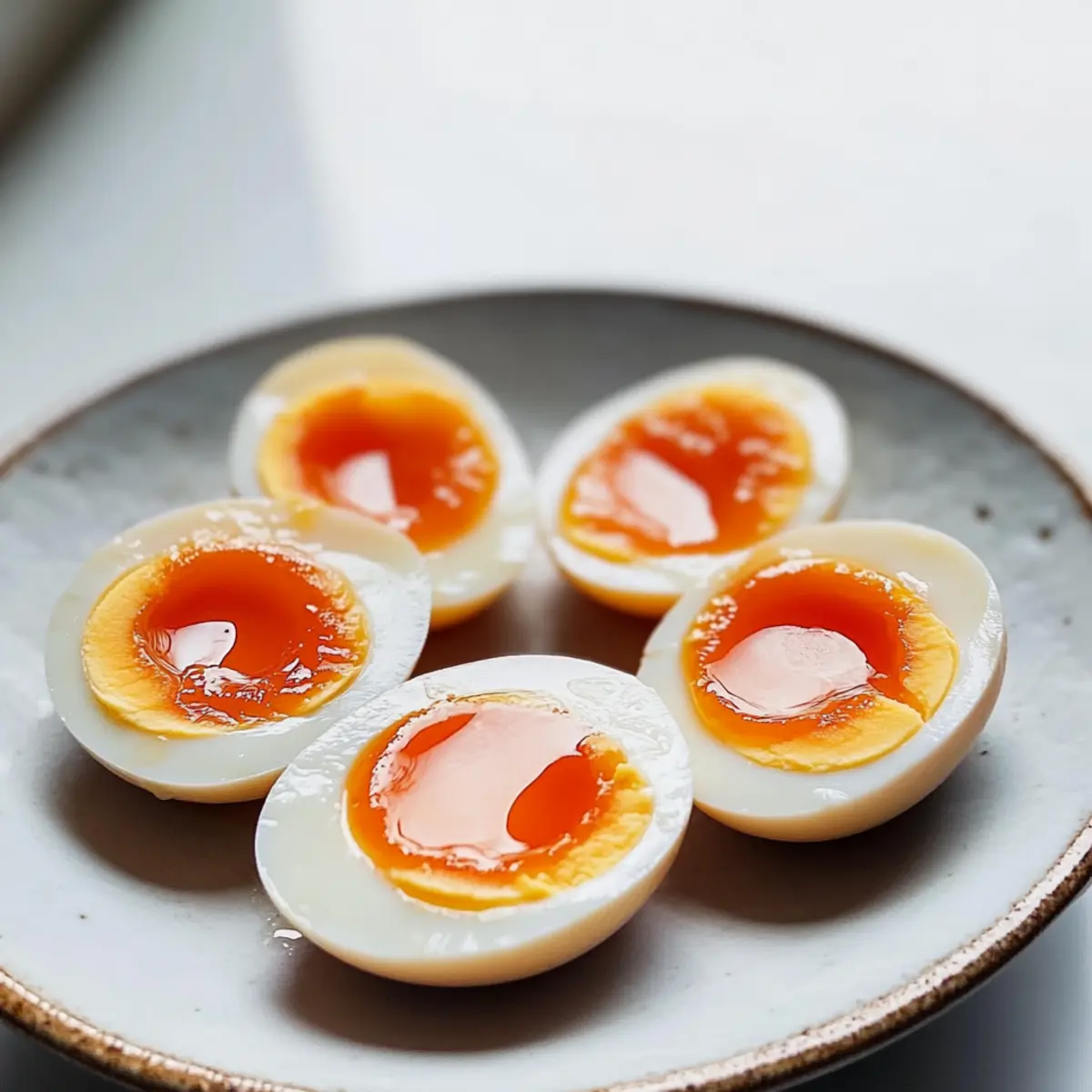
Ramen Egg Bliss: Craft Soft-Boiled Umami Heaven at Home
Ingredients
Equipment
Method
- Prepare Marinade: In a small saucepan, combine low sodium chicken stock, soy sauce, sake, evaporated cane sugar, and ginger. Heat over medium-high heat until boiling. Simmer for about 2 minutes. Remove from heat and let cool.
- Crack Eggs: Tap the bottom of each large egg gently with a spoon to create a small divot. Set aside.
- Boil Eggs: Fill a pot with 2 inches of water and bring to a boil. Carefully add prepared eggs, cover, and turn off heat. Set a timer for 5-6 minutes.
- Cool Eggs: Transfer eggs to an ice water bath for at least 20 minutes.
- Peel Eggs: Crack the eggshells gently and peel away the shells.
- Marinate Eggs: Place peeled eggs into a zipper-sealed bag. Pour cooled marinade over eggs, seal, and refrigerate for 8-12 hours.
- Store: Transfer eggs to an airtight container if not consumed immediately.